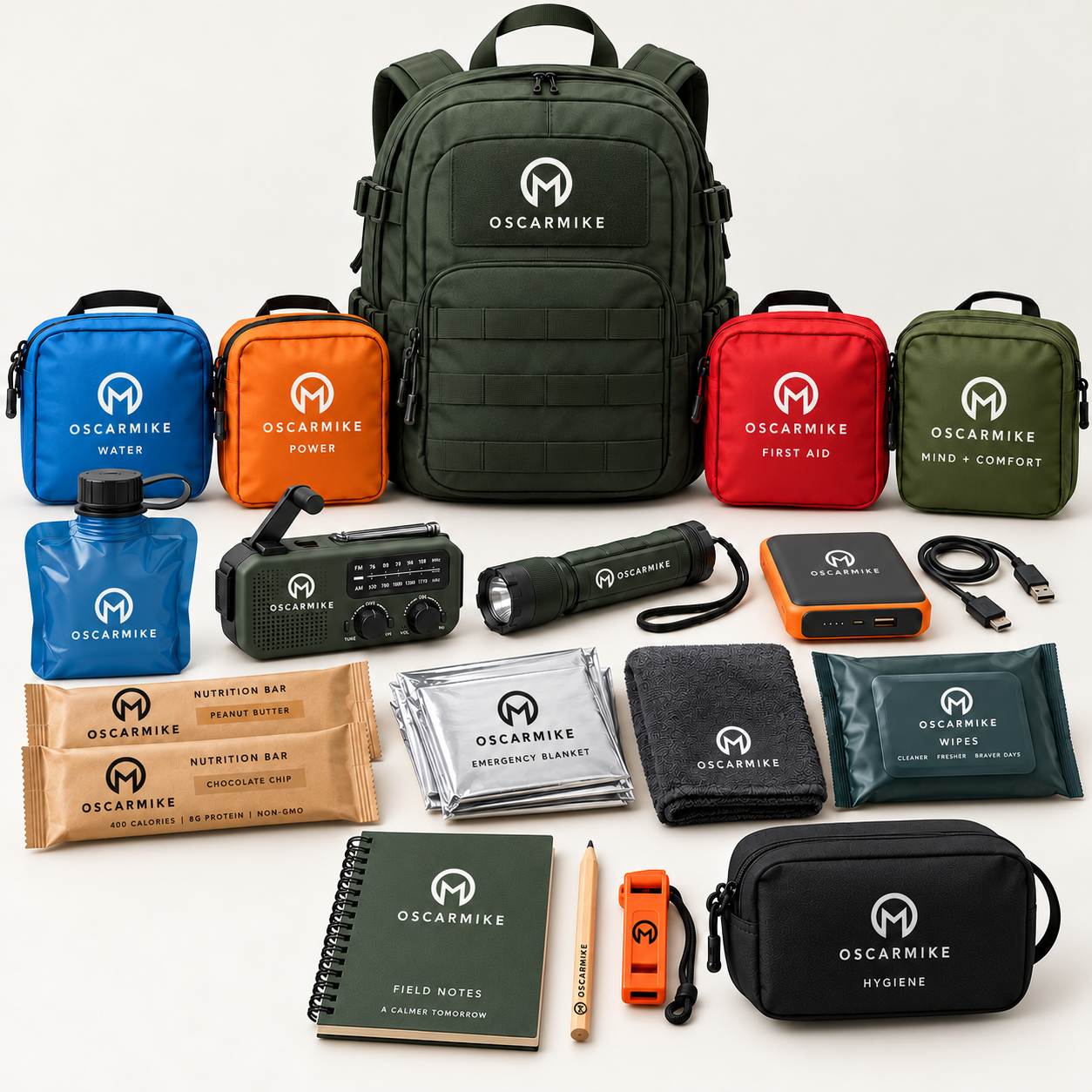
The government now asks every home to be ready for three days.

Results for “{{ q }}”

Nothing matched. Try “radio”, “water” or “power cut”.

Free preparedness guide · Nothing to buy here

Ready for what happens next.

A power cut. A flooded road. A network that stops. Plain checklists of what a household actually needs when ordinary things stop working, drawn from documented blackouts and official guidance.

A 72-hour kit laid out by module

What recent events showed

Normal stopped working several times in the last few years.

None of these ended in collapse. All of them removed, for hours or days, services people assumed were permanent.

{{ e.date }} · {{ e.where }}

{{ e.title }}

{{ e.body }}

Our takeaway

{{ e.lesson }}

Source: {{ e.source }}

Twelve modules. One shopping list each.

Each module is a short list of ordinary things that solve one problem. Kits are combinations of modules. Tick off what you already own.

Lessons from people who have already been there.

Apartment blocks in darkness during a power cut, Ukraine
Ukraine · Power

When the electricity stopped

Attacks on Ukraine’s electricity infrastructure disrupted water supplies, heating, transport and telecommunications. In Kharkiv, power failures affected warning systems. A power cut becomes a communications and mobility problem.

Source: UN Human Rights Monitoring Mission in Ukraine, Energy Infrastructure Report, September 2024.
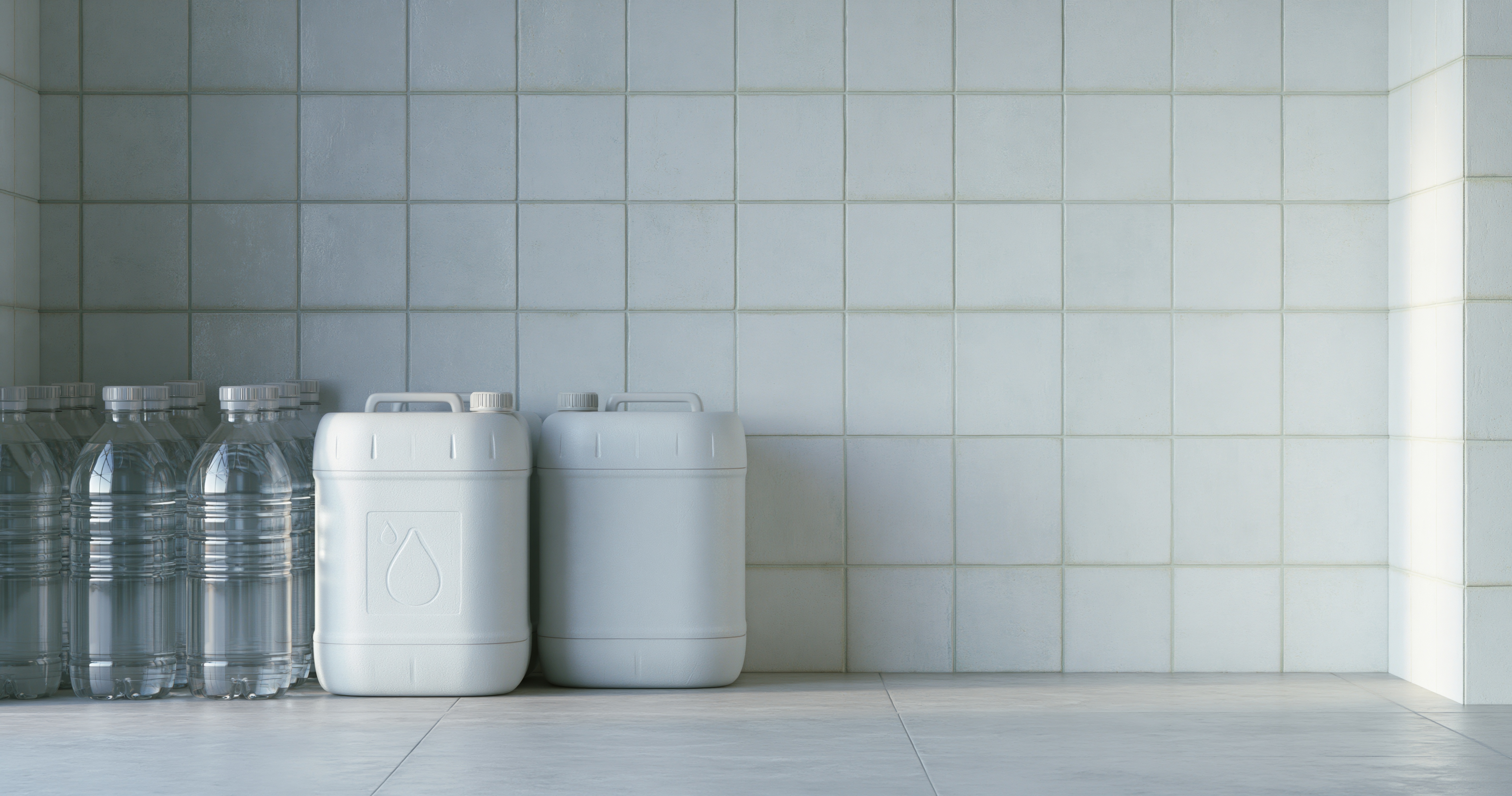
Stored water bottles and containers against a tiled wall
Gaza · Water & Hygiene

The importance of ordinary essentials

Humanitarian reporting documented shortages of clean water, toilets, menstrual hygiene products and containers for storing water. Sanitation and dignity are fundamental to preparedness.

Sources: UN OCHA Humanitarian Situation Updates and UNFPA, 2024; UN humanitarian coordinator account, July 2024.

Three people with backpacks walking along a road at dusk
Iberia · Cash, radio, water

A day without power in Spain and Portugal

On 28 April 2025 most of Spain and Portugal lost power until the evening. Card payments, cash machines and, later, mobile coverage failed; cash, battery radios and charged phones were what people had to fall back on.

Sources: Red Eléctrica de España statements, 2025; ENTSO-E expert panel factual report, 2025.

Official guidance · Autumn 2026

The government now asks every home to be ready for three days.

Be Ready, launched by the Cabinet Office on 22 October 2026, lists three litres of water per person per day, no-cook food, a torch, cash, a power bank and a wind-up or battery radio. In a prolonged national outage, official health advice would be broadcast on BBC Radio 2 and Radio 4.

Understanding is preparation.

Preparedness, reconsidered.

What do people actually need when things go wrong? Not what looks impressive. What genuinely helps.

OSCARMIKE was created around that question. It is an information resource, not a shop. We do not sell kits, take commission or recommend brands. Every list on this site can be filled from an ordinary supermarket, pharmacy and hardware shop, and most households already own half of it.

Our approach begins with understanding real emergencies and the ordinary problems they create. A loss of electricity becomes a loss of communication. A disrupted water supply becomes a sanitation problem. An evacuation becomes a challenge of documentation, medication and mobility.

We use those lessons to write short, specific checklists, a food and water plan, and straightforward advice.

Because being prepared shouldn’t be complicated.

A family reviewing an emergency plan and supplies together at home

{{ p.title }}

{{ p.body }}

Nothing unnecessary.

Every item on every list was tested against five questions. If it doesn’t serve a purpose, it isn’t on the list.

01What problem does it solve?
02How likely is that problem?
03How well does it work?
04Is there a simpler alternative?
05Does it justify its cost, weight and space?

Realistic emergencies, not Hollywood ones.

Each scenario separates documented events, established risks and plausible hypotheticals. None of them end in collapse.

{{ s.imgHint }}

Scenario {{ sc.num }} · {{ sc.kind }}

{{ sc.head }}

{{ sc.intro }}

{{ sc.imgHint }}

Disruption timeline drag to explore

Possible effects, not predictions.

{{ sc.stage.t }}

{{ sc.stage.label }}

  • {{ e }}

What you can do now

{{ sc.stage.prep }}

Services that may be affected

{{ s.name }}

What to do

  1. {{ a }}

What real events teach us

{{ sc.evidence }}

What remains uncertain

{{ sc.uncertain }}

What you would need

The modules below cover this scenario. Each opens a checklist you can tick off.

Twelve modules. Each one earns its place.

A module is a short list of ordinary things that solve one problem. Quantities are for one adult; scale them for your household. Tick off what you already have.

{{ m.icon }}{{ m.num }}

{{ m.tag }}

{{ m.count }} items · {{ m.weightLabel }}{{ m.progress }} ticked
{{ md.name }} module contents
Your progress{{ md.progress }}

Ticks are saved on this device. Print the list and keep it with the kit.

Module {{ md.num }}

{{ md.name }}

{{ md.tag }}

{{ md.why }}

Items

{{ md.count }}

Packed weight

{{ md.weightLabel }}

Volume

{{ md.volLabel }}

Check / replace

{{ md.shelf }}

Checklist

Quantities per adult · tick what you already own

Limitations

{{ md.limits }}

Scenarios it covers

{{ s }}

Part of these kits

Personalise

{{ v }}

Four kits. Each one is a checklist.

Pick the one that matches how you would spend a disruption: on the move for a day, away for three, at home for a fortnight, or together as a family. Tick, print, pack.

{{ k.name }} contents
{{ k.duration }} · {{ k.people }}

{{ k.strap }}

{{ k.desc }}

Checklist{{ k.progress }} ticked

{{ kd.duration }} · {{ kd.people }}

{{ kd.name }}

{{ kd.strap }}

{{ kd.desc }}

{{ kd.name }} contents

Items

{{ kd.itemCount }}

Packed weight

{{ kd.weightLabel }}

Keep it in

{{ kd.bag }}

Ticked

{{ kd.progress }}

{{ g.icon }}{{ g.tag }}
{{ g.progress }}
Not on any list. Prescription medication, spare glasses, hearing-aid batteries, baby formula and personal documents are yours to add. No kit guarantees safety in an emergency; it makes the first days easier.

A reserve you will actually eat.

The list below is ordinary supermarket food, sized to your household, that needs no fridge and no cooking. Build it over a few weeks and rotate it through normal meals. Nothing should expire unused.

People{{ food.people }}
Days{{ food.days }}

Plan

{{ food.summary }}

Energy

{{ food.kcal }}

Drinking water

{{ food.water }}

Ticked

{{ food.progress }}

Shopping list

Quantities are OSCARMIKE planning assumptions: about 2,000 kcal per adult per day, and 3 litres of drinking water per person per day as in the government’s Be Ready advice. Children, pets, pregnancy, illness and hard physical work change the numbers. Greyed rows need hot water.

Your progress

Everything you have ticked across the site, saved on this device. Nothing is sent anywhere.

{{ doneCount }}

items ticked

The Journal

Articles are colour-coded by the module they relate to most.

{{ m.name }}

{{ ar.cat }}

{{ ar.title }}

{{ ar.author }}Published {{ ar.date }}Last reviewed {{ ar.reviewed }}{{ ar.read }} read

{{ p }}

{{ sec.h }}

{{ p }}

  • {{ li.head }}{{ li.rest }}

{{ p }}

Practical takeaways

  • {{ t }}

Sources

  1. {{ s }}

Reported facts are attributed to their sources; interpretation is OSCARMIKE’s own.

We’re straightforward to reach.

contact@oscarmike.co.uk
Corrections and sources
Suggest a scenario or article
Community groups and schools
Press and research

We do not sell anything and do not accept sponsorship from equipment retailers.

Thank you. Your message has been sent to contact@oscarmike.co.uk. We aim to reply within two working days.

Sorry, the message could not be sent. Please email contact@oscarmike.co.uk directly.